


HANGCHA
Hangcha warehouse equipment covers the electric pallet handling machines that keep goods moving between dock, floor and racking. Choose an electric pallet jack (up to 3 t) for low-lift moves across the floor, or a pallet stacker (up to 2 t, lifting to 5.5 m) to put pallets into low and mid-level racking without a full forklift. All models are stocked in Melbourne, Sydney and Brisbane with local parts and servicing.
Out of stock
Here you can send us an inquiry concerning general questions about Hangcha.
"*" indicates required fields
Our warehouse equipment range covers two types of electric pallet handling machine. Choose by how high you need to lift and how far you need to travel.
Capacity up to 3 t and lift height 80 to 125 mm, for moving pallets across the floor, loading trucks at the dock and feeding pick lines. The A Series Mini Walkie Pallet Jack (1.5–2.0 t, lithium-ion) suits short moves and tight spaces. The A Series Rider Pallet Jack and A Series Pallet Jack Hi Range (both 2.0–3.0 t) handle heavier pallets and longer runs.
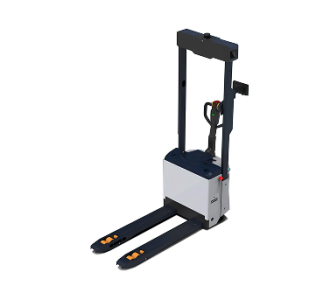
Capacity up to 2 t and lift heights from 2.0 to 5.5 m, for putting pallets into low and mid-level racking without a full forklift. The range runs from the compact WS Series Pedestrian Stacker and A Series Mini Range Stacker for racking up to about 3.5 m, through to the A Series Walkie Straddle Stacker, A Series Counterbalanced Pallet Stacker and A Series Stand-On Stacker with Reach Fork for lifts up to 5.5 m.
| Model | Type | Capacity | Lift height | Best for |
|---|---|---|---|---|
| A Series Mini Walkie Pallet Jack | Walk-behind pallet jack | 1.5–2.0 t | 80 mm | Truck loading, short moves, tight spaces |
| A Series Rider Pallet Jack | Ride-on pallet jack | 2.0–3.0 t | 125 mm | Long runs, cross-docking, heavy pallets |
| A Series Pallet Jack Hi Range | Pallet jack | 2.0–3.0 t | 125 mm | Heavy pallets in busy warehouses |
| WS Series Pedestrian Stacker | Walk-behind stacker | 1.5 t | 2.0–3.5 m | Low racking, lighter duty cycles |
| A Series Mini Range Stacker | Compact stacker | 1.2–1.5 t | 2.0–3.6 m | Low racking in compact spaces |
| A Series Walkie Straddle Stacker | Walk-behind straddle stacker | 1.34–1.82 t | 2.0–5.5 m | Closed-bottom pallets, mid-level racking |
| A Series Counterbalanced Pallet Stacker | Counterbalanced stacker | 0.8–2.0 t | 2.0–5.5 m | Any pallet type, no front legs |
| A Series Stand-On Stacker with Reach Fork | Stand-on stacker | 1.2–1.6 t | 2.5–5.5 m | Higher racking and longer runs |
If your pallets stay on the floor, a pallet jack is the faster and cheaper choice: it lifts just enough to clear the ground and moves loads between dock, staging area and pick face. If you need to put pallets onto racking, a mezzanine edge or a workbench, you need a pallet stacker. Once your top beam is above about 5.5 m, or you move heavy pallets at height all day, step up to a reach truck or electric forklift.
Ast is the aisle width a machine needs to turn and place a pallet at right angles to the racking. Each model's specification sheet lists it for a standard pallet. Compare that figure, plus a safety clearance of about 200 mm, with your narrowest aisle. Walk-behind models are the most compact. Stand-on models need a little more length for the platform, but let the operator ride on longer runs.
A stacker that lifts 1.5 t at ground level will not lift 1.5 t at 5 m. Use the load chart for each model to check capacity at your top beam height, and match it to your heaviest pallet with some margin to spare.
Standard stackers put their legs under the pallet, so they need open-bottom pallets. For closed-bottom or double-faced pallets, choose a straddle stacker, whose legs sit outside the pallet, or a counterbalanced stacker, which has no front legs at all.
Pallet jacks and stackers run on small wheels and are designed for smooth, level floors. Check the gradeability of your chosen model against your steepest ramp or dock plate, and leave a buffer of at least 1 to 2%.
Walk-behind models suit short, frequent moves. For long runs across a large warehouse or multi-shift work, a ride-on pallet jack or stand-on stacker reduces operator fatigue and gets more pallets moved per hour.
| Job | Recommended model |
|---|---|
| Loading and unloading trucks at the dock | A Series Mini Walkie Pallet Jack |
| Moving heavy pallets over long distances or cross-docking | A Series Rider Pallet Jack |
| Stacking pallets onto low racking up to about 3.5 m | WS Series Pedestrian Stacker |
| Handling closed-bottom or double-faced pallets | A Series Walkie Straddle Stacker |
| Mixed pallet types, loading onto benches or into racking up to 5.5 m | A Series Counterbalanced Pallet Stacker |
For a deeper look at matching equipment to your layout, read our warehouse equipment buyer's guide.
Beyond pallet jacks and stackers, we supply the full set of powered equipment for a modern warehouse:
| Local stock | Held in Dandenong (VIC), Smeaton Grange (NSW) and Meadowbrook (QLD) |
| Delivery | 1 to 3 days to Melbourne, Sydney and Brisbane metro areas |
| Parts and servicing | Local parts and scheduled servicing from our service teams in all three states |
| Operator training | Training for pallet jack, stacker and forklift operators |
| Power | Lithium-ion on most models, lead-acid on the WS Series |
| Manufacturer | Hangcha Group, building industrial vehicles since 1956. See our certificates |