

Choosing the right truck for a narrow aisle warehouse is not just about lift height. That is where many businesses get caught. A truck might reach the top beam, but if it slows down picking, blocks traffic, or needs a licence your team does not yet have, it may not be the right fit.
For most Australian warehouses, the decision usually comes down to three options: reach truck, order picker, or turret truck. Each one can work well in narrow aisles, but they solve different problems. The better question is not “Which one is best?” It is “What work do we need this machine to do every day?”
Start With the Job, Not the Truck
Before comparing models, look at how stock actually moves through your warehouse. Are operators moving full pallets in and out of racking? Are they picking individual cartons or items from different levels? Do you need maximum storage density, or do you need flexibility because the layout changes often?
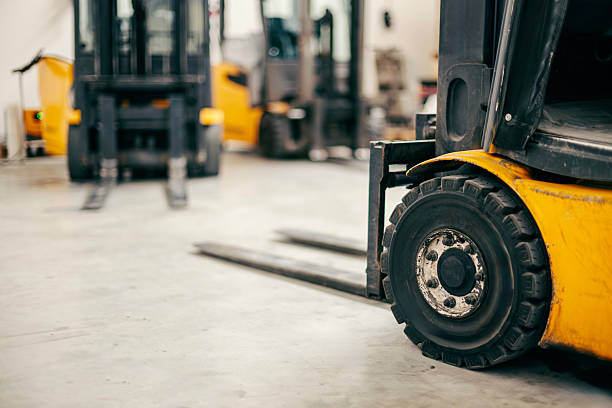
A Narrow aisle forklift should support the workflow, not force the warehouse to work around the machine. In a busy Melbourne or Australian distribution centre, the wrong choice can create slow pick rates, damaged pallets, congested aisles and extra training costs.
Reach Truck: Best for Pallet Movement and High-Rack Storage
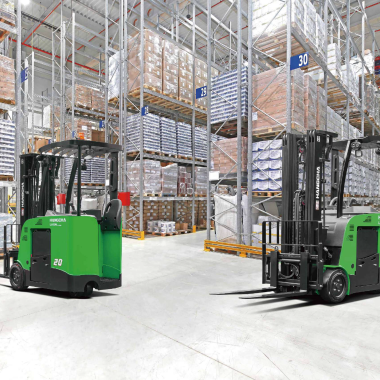
A reach truck is usually the most practical option when the main task is moving full pallets. It is designed to reach into racking, lift loads to higher storage levels, and operate in tighter aisles than a standard counterbalance forklift.
Reach trucks are popular in warehouses that handle bulk stock, replenishment pallets, wholesale goods, FMCG, manufacturing materials and third-party logistics storage. They work well when the operator is not picking individual items from height, but instead placing and retrieving pallets.
The main advantage is speed and stability in pallet handling. Operators can move from receiving to storage to dispatch without needing the same aisle width as a counterbalance forklift. The trade-off is that reach trucks are not ideal for high-level piece picking. If your team regularly needs to pick cartons or single items from upper rack levels, an order picker may be more efficient.
Order Picker: Best for Piece Picking and SKU-Heavy Warehouses
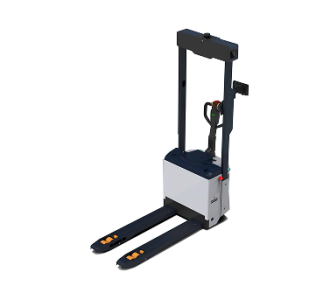
An order picker is built for a different type of job. Instead of only lifting the load, it lifts the operator with the picking platform. This allows staff to select cartons, parts or individual products directly from racking at different heights.
This makes order pickers useful for eCommerce, retail distribution, spare parts, hardware, fashion, pharmacy-style storage and warehouses with many SKUs. If your orders are made up of mixed items rather than full pallets, the order picker can reduce walking time and improve picking accuracy.
The important thing is to look at the picking path. If an operator needs to stop at many locations, pick several items, scan them, and continue through the aisle, an order picker often makes more sense than sending a reach truck to move pallets around.
There are also safety and licence issues to consider. In Victoria, WorkSafe lists forklift operation and order-picking forklift operation as separate high risk work licence classes, commonly referred to as LF and LO. WorkSafe Victoria also reported 142 accepted forklift incident claims in 2022, with transport, postal and warehousing accounting for the highest number of claims. That is a good reminder that equipment choice, training and traffic management all matter. You can read more from WorkSafe Victoria’s forklift safety guidance.
Turret Truck: Best for Very Narrow Aisle Density
A turret truck, sometimes called a VNA truck, is designed for high-density storage in very narrow aisles. Instead of turning the whole truck to face the racking, the fork carriage can rotate or work sideways. This allows the truck to operate in fixed aisles with less manoeuvring space.
Turret trucks are a strong option when floor space is expensive and the warehouse is designed around high racking and tight aisle layouts. They are often used in large distribution centres, cold storage, high-volume pallet storage and facilities where every square metre needs to work harder.
The downside is flexibility. A turret truck usually needs a more planned environment. Aisle guidance, floor quality, racking layout, battery planning and operator training all become more important. If your warehouse layout changes often, or you still need the truck to work across mixed zones, a reach truck may be simpler.
Quick Comparison Table
| Equipment Type | Best For | Common Strength | Watch Out For |
| Reach Truck | Full pallet storage and retrieval | Fast pallet handling in narrow aisles | Not ideal for high-level piece picking |
| Order Picker | Carton, item and SKU-level picking | Operator can pick directly at height | Requires the right picking process and operator training |
| Turret Truck | Very narrow aisle, high-density storage | Maximises pallet positions per square metre | Less flexible and needs strong layout planning |
Cost: Look Beyond the Purchase Price
New narrow aisle equipment in Australia can vary widely depending on brand, lift height, battery type, mast configuration, capacity and guidance systems. A basic comparison on price alone can be misleading.
A cheaper truck may cost more over time if it slows down operators or needs more maintenance. A higher-spec truck may pay for itself if it improves pallet density, reduces travel time or supports faster picking during peak periods.
When comparing options, include:
- Purchase or finance cost
- Battery and charger requirements
- Maintenance access and service support
- Operator training and licence needs
- Racking compatibility
- Aisle width and turning space
- Load weight at maximum lift height
- Future warehouse growth
The best machine is not always the biggest or most expensive one. It is the one that improves the daily flow of work.
Common Buying Mistakes
Choosing by Lift Height Only
Lift height matters, but it is not enough. You also need to check residual capacity at height. A truck may technically lift high, but not with the load weight you need.
Ignoring Aisle Width
A few hundred millimetres can make a big difference. Always measure usable aisle width, not just rack-to-rack distance. Consider pallets overhanging, rack protection, floor condition and turning zones.
Forgetting the Operator
Comfort affects productivity. Visibility, control layout, platform stability, travel speed and ease of entry all influence how well the truck performs across a full shift.
Which One Should You Choose?
Choose a reach truck if your warehouse mainly handles full pallets, bulk storage and regular rack replenishment.
Choose an order picker if your team picks individual products or cartons from multiple rack levels and order accuracy is a priority.
Choose a turret truck if your biggest challenge is storage density and your warehouse can support a more structured very narrow aisle layout.
A Narrow aisle forklift is a long-term warehouse decision, not just a machinery purchase. The right choice should fit your racking, operators, stock profile, order volume and growth plans.
If you are planning a new warehouse layout or upgrading your current fleet, Hangcha Australia can help you compare reach trucks, order pickers and turret trucks based on real site conditions. Contact our team today for practical advice, equipment recommendations and a solution that fits the way your warehouse actually works.