


Modern workplaces regard scissor lifts as their fundamental equipment because these devices enable workers and equipment to access high positions through safe vertical movement. The system provides better safety performance than ladders and temporary platforms because it enhances both workplace productivity and operational consistency during ongoing construction work. Active job sites prove their ability to reduce fall accidents through research studies of the industry and safety investigations simultaneously improve their outstanding operational performance for tasks that require multiple climbs and descents. There are several types of scissor lifts designed for different conditions. The indoor operations of warehouses and factories especially depend on electric lifts. The construction process becomes more efficient because of the three characters the scissor lifts have, which are separately flexible working height, reliable platform dimensions and various drive system selection. The selection of suitable models needs urgent resolution because Australia faces increasing numbers of civil construction and infrastructure development projects.
The selection of scissor lifts which match actual site conditions leads to decreased equipment downtime and enhanced workplace safety and better operational performance.
The different types of scissor lift
Electric Scissor Lifts
The electric scissor lift operates without noise and produces no emissions which makes it suitable for working inside warehouses and factories and commercial buildings. The electric motors which power these devices operate with complete silence while producing no emissions at the location which makes them appropriate for use in both building environments and external areas.
The system delivers multiple vital advantages to users:
- Compliance with emissions and noise regulations.
- Safer operation in enclosed or public spaces.
- The system operates at lower costs for maintenance and operation when compared to traditional fuel-based equipment.
The selection process for equipment starts with electric scissor lifts because these machines provide the optimal blend of environmental sustainability and operational flexibility which suits contemporary construction sites.
Hydraulic Scissor Lifts
Hydraulic lifts use advanced hydraulic systems to provide smooth, controlled lifting. They can be used in both indoor and outdoor scenarios by offering precise platform movement for tasks that require steady elevation.
Compact or Micro Scissor Lifts
These small, highly manoeuvrable lifts are designed for tight spaces and narrow aisles. Their compact size allows operators to navigate confined areas while still providing a safe elevated platform for maintenance or installation work.
Scenario-based selection of scissor lifts for Australia worksites
Warehouses and distribution centres with narrow aisles
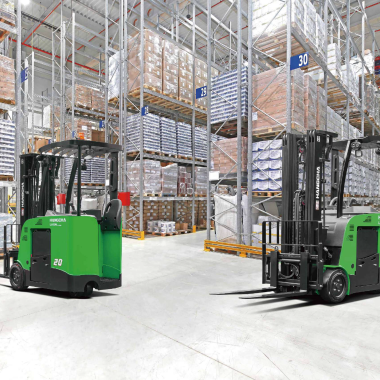
In warehouses the aisles are tight. The ceiling is low. Forklifts move a lot in the warehouse. I have found that small electric scissor lifts work, in that setting. The small size of the electric scissor lifts lets workers move the lift through lanes without hitting anything. The electric power of the electric scissor lifts makes no emissions and keeps the lift quiet. The work area stays calm. Platforms that have widths that can change and guardrails that fold make it easier to use the lift, in spaces. When you pick a model, you should also think about how the battery lasts and how you will charge it because warehouse work often goes on for shifts.
Maintenance work in shopping centres, airports, and public buildings
Many maintenance tasks in facilities need to make sure the people are safe and keep disruption low. The noise restrictions, the pedestrian traffic and the sensitive indoor flooring all decide what equipment to use. Compact electric scissor lifts give operation, smooth movement and tight turning radius. Furthermore, compact electric scissor lifts can reduce ground pressure that protects floors, and they have dimensions that make them easy to place in confined areas.
When routine maintenance is needed in commercial buildings, compact self-propelled electric scissor lifts are good choices by giving the worker-controlled impact access. It is powered by electricity and has a maximum load capacity of 551lb. The lift height ranges from 233-300 inches, which makes it suitable for indoor ceiling installation. Furthermore, the electric driving mode keeps the noise low, making it suitable for quiet area working.
Outdoor works on paved surfaces such as car parks and loading zones
When builder work on level surfaces such as parking lots or loading docks, an electric scissor lift gives the balance of mobility and lift height. The focus is on productivity and easy transport not on handling terrain. An electric scissor lift fits where emissions rules apply or where noise is a problem. Look for a scissor lift, with stabilizers, smooth travel speed and easy set up to improve operations.
Mixed indoor-outdoor use across multiple sites
Projects that move between indoor and outdoor environments need equipment that adapts easily. Projects requiring frequent moving environments can keep costs when the equipment adapts. Additionally, consistently managing machines for different surfaces raises costs. Electric crawler scissor lifts in these cases may be the good choice since they reduce the need for rentals or special machines by their versatility character. It provides strong stability on uneven grounds by its crawler system, and it has a load capacity ranging from 230-450kg, fulfilling a cooperation working situation. The lift height can raise from 6.5 to 13.8m, which make it superior in various working situations. Additionally, with the electric drive system, the lift can lower the noise when working in a closed environment.
Common mistakes when buying a scissor lift
Choosing maximum height instead of usable height
One of the most common mistakes is selecting a scissor lift based solely on its maximum working height. Even though the higher reach may look safer, it can bring unnecessary cost as well as reducing manoeuvrability. Taller lifts are often heavier and wider, which may prevent them from fitting through places like doorways, lifts, or narrow aisles. In many cases, a slightly lower working height provides the same functions while offering better mobility.
Underestimating ground conditions and surface strength
Another frequent issue people make is assuming that all flat-looking surfaces are suitable for standard scissor lifts and the specific parameters of the ground have been ignored. However, floor load ratings, temporary paving, and outdoor surface stability can all affect safe operation. On construction sites, ground conditions may change daily due to weather or ongoing works. Therefore, choosing a lift without adequate ground clearance, traction, or weight distribution can potentially lead to instability and restricted movement. Proper evaluation of surface strength and consistency is essential before choosing the scissor lift model.
The Takeaway
Choosing the right scissor lift comes down to how your site operates. Focus on usable working height, surface conditions, and how often the lift will be moved or repositioned. Match the lift type to your most common work environment rather than occasional tasks. A scissor lift that fits daily site conditions will deliver better safety, productivity, and long-term value across Australian worksites.