


What Is a Narrow Aisle Forklift?
For most modern warehouse storage systems, use space efficiently is critical in terms of improving storage quantity and lowering the costs. When there is a limited budget, managers commonly choose to rent smaller warehouse to reduce the costs. However, they need to guarantee the convenience of the transportation within the warehouse even though the area is strictly confined. To reach the goal, narrow aisle forklift becomes the ultimate tool for most small warehouses.
Compared to their standard counterparts, narrow aisle forklifts are the go-to solution for high-density storage. Apart from that, a narrow aisle setup is very common for small warehouses and narrow aisle forklifts don’t need larger turning space, which also give the warehouse more space to store. However, If the main task is long distance transportation or heavy item lifting, the standard forklifts may be suitable.
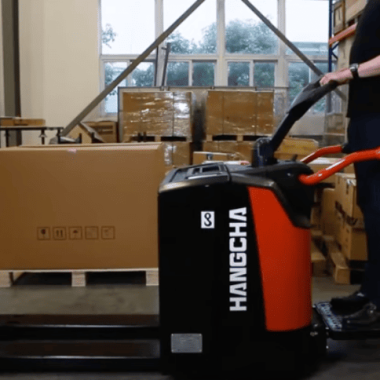
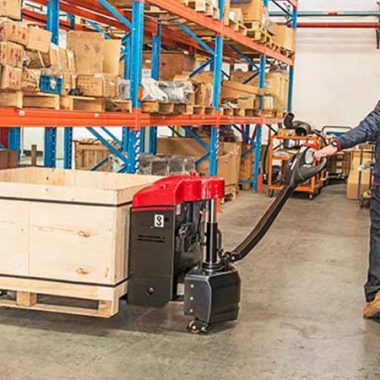
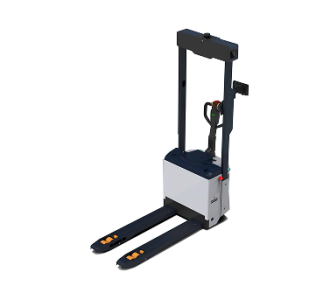
In current warehouse market, the narrow aisle forklift has two main types: Reach Trucks and Order Pickers. They are both designed for high-density warehouse storage.
Reach Trucks
Reach Trucks can efficiently extract and store cargo pallets from the shelves. The forks of this vehicle can extend deep into the shelves, enabling the operation of high-level shelves, which significantly enhance warehouse efficiency.
- Capable of operating the elevated shelves, with a lifting height of up to 6-7 meters or even higher.
- The forward-retractable arm can extend into the deep part of the shelf, suitable for double-row or multi-row pallets.
- Suitable for indoor warehouses with narrow aisles
Order Pickers
Order Pickers can directly pick items from the platform of the forklift, suitable for picking individual or small batches of items. They are mainly used in sorting centres, e-commerce warehouses, or retail warehouses.
- The operator can stand directly on the platform and quickly pick up the goods.
- Suitable for single-piece or small-batch goods picking
- Easy to operate on the high level shelves and supports vertical picking.
Narrow Aisle Forklift vs Standard Forklift: Key Differences
Narrow aisle forklifts and standard forklifts can both perform warehouse transportation tasks, but they have their own advantages in different working environments. As they are differing in size, forks arrangement, and operation, they are used to deal with different lifting tasks. Wrong choices of forklifts would affect the storage efficiency and operational safety.
Width requirements for aisles
Narrow aisle forklifts are specifically designed for narrow aisles. For shelves need to be arranged closely, narrow aisle forklift is the choice since it can significantly increase the utilization of storage space. In contrast, standard forklifts normally require wider aisles to ensure smooth transportation.
- Narrow aisle forklift: The target aisles are approximately 1.8 – 2 meters wide.
- Standard forklift: At least 3 meters for passage distance.
Enterprises can increase the number of shelves by reducing the distance between original stored area. As a result, the warehouse can store more goods and greatly improve the storing efficiency.
Storage Density
- Narrow aisle forklifts can operate flexibly in limited spaces, which makes manager be able to shorten the shelves distance, gradually increasing storage density around 30%
- For areas with high land costs, the cost reduction achieved by shelves narrowing is particularly critical
Lifting height
Narrow aisle forklifts are typically suitable for high shelving systems since it can efficiently reach the high-level storage area and retrieve the pallets.
- The Reach Truck can lift the pallet to a height of 7 meters.
- Order Picker is suitable for picking individual items.
- Standard forklifts are generally used for transporting goods at medium and low height levels.
This design makes narrow-channel forklifts highly suitable for modern vertical storage systems, while standard forklifts are more suitable for low-level transportation tasks.
Working Environment
The working environments suitable for the two types of forklifts are also different:
- Narrow aisle forklift: Suitable for indoor warehouses, with regular layout and standardized shelf system.
- Standard forklift: The characteristic of wide range makes it suitable for outdoor storage yards or large storage areas.
Narrow aisle forklifts have advantages in precise operation and efficient space utilization, while standard forklifts focus on flexibility and carrying capacity.
When should one choose a narrow aisle forklift?
Before choosing a forklift, the warehouse layout and the specific operational requirements should be carefully considered. If the warehouse needs to maximize storage capacity within a limited space, narrow aisle forklifts are the ideal choice. High-density shelving systems are usually complicated to manage, and precise operation is essential to maintain the efficiency. Narrow aisle forklifts can be applied to such working conditions, guaranteeing operational efficiency and warehouse utilization.
Furthermore, warehouses that rely on vertical storage also need narrow aisle forklifts since it can operate the high-level shelves easily. For instance, the reach truck is suitable to deal with high level pallets and cargo, while the order picker is suitable for picking individual item among various categories.
When making a choice, it is recommended to measure the width of the warehouse aisles first, then the height of the top shelf, and last the daily operation requirements. Choosing the right forklift model is important for your warehouse environment.
Takeaway message
The main advantages of narrow-passage forklifts are:
- Save channel space and increase storage density
- Adapt to the operation of elevated shelves
- Easy to operate in small or high-density warehouses
The advantages of standard forklifts are:
- Versatile and adaptable to various environments
- Strong load carrying capacity
- Useful in large warehouses or outdoor transportation
To optimize operational efficiency and warehouse utilization rate, enterprises should select the most suitable forklift model based on the warehouse layout, aisle width, shelf height and handling requirements. For further information or you would like some professional advice, don’t hesitate to contact our support team.