


When choosing a reach truck, load capacity and lift height usually get most of the attention. But there is another decision that can have just as much impact on day-to-day warehouse work: should the operator stand or sit?
Stand-on and sit-down reach trucks are both designed for pallet handling in narrow warehouse aisles, but they suit different work patterns. A truck that feels quick and practical during short picking cycles may become tiring over a full shift. On the other hand, a comfortable seated truck may take up more operating space than a very tight warehouse can afford.
The right choice comes down to aisle layout, shift length, travel distance, pallet movements and how operators actually use the truck during the day.
Stand-On vs Sit-Down Reach Trucks: The Main Differences
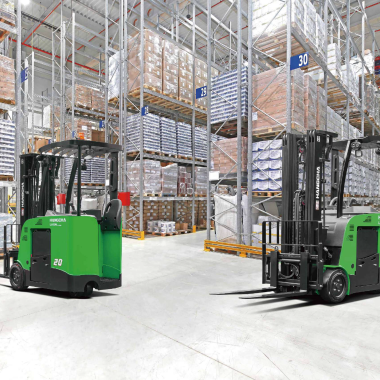
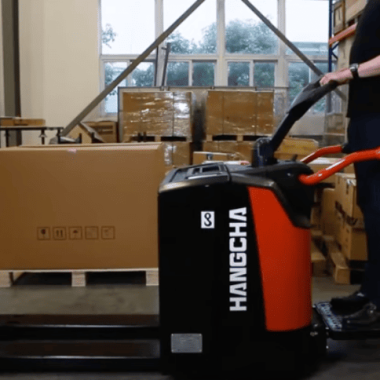
A stand-on reach truck keeps the operator standing inside the compartment while travelling, lifting and placing pallets. This generally allows a compact truck design and makes getting on and off relatively quick.
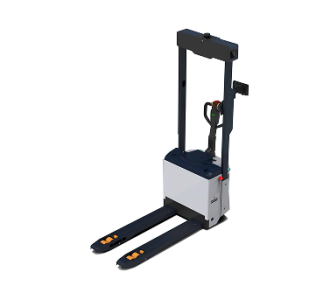
A sit-down reach truck gives the operator a seat and is usually better suited to longer periods of continuous operation. Reach truck seating is often positioned sideways rather than like a conventional counterbalance forklift, helping the operator maintain visibility while travelling and handling loads.
Here is the practical difference:
| Factor | Stand-On Reach Truck | Sit-Down Reach Truck |
| Best suited to | Shorter, frequent handling cycles | Longer continuous shifts |
| Operator position | Standing | Seated |
| Getting on/off | Fast and convenient | Less suited to constant dismounting |
| Tight aisle operation | Often more compact | May require slightly more room |
| Long travel distances | Less comfortable over time | Generally more comfortable |
| Frequent pallet movement | Very suitable | Very suitable |
| Operator fatigue | More important on long shifts | Better support for extended use |
Neither format is automatically more productive. Productivity depends on what happens during an actual shift.
When Does a Stand-On Reach Truck Make More Sense?
Stand-on trucks work particularly well where operators frequently move between driving and other warehouse tasks.
Think about a warehouse where an operator retrieves a pallet, travels a short distance, gets off the truck to check stock or paperwork, then gets back on for the next movement. If that cycle happens dozens of times each shift, quick entry and exit can be useful.
They also make sense where aisle space is limited. For example, Hangcha’s 1.5-tonne A Series stand-on model lists a turning radius of around 1,600 mm, showing why this configuration can work well in compact warehouse layouts. Hangcha Australia’s broader reach truck range includes models for narrow aisle and high-bay applications, with capacities from around 1.0 to 3.0 tonnes.
A stand-on model is worth considering if your warehouse has:
- short travel distances between racks and staging areas
- frequent stops and starts
- regular operator entry and exit
- tight working aisles
- high-frequency pallet movements rather than long travel runs
However, compact does not always mean better. If an operator spends most of an eight-hour shift on the truck, standing for extended periods becomes a more important consideration.
When Is a Sit-Down Reach Truck the Better Choice?
Sit-down reach trucks become more attractive as shift length and travel time increase.
Large distribution centres may require operators to travel repeatedly between receiving areas, reserve storage, high-bay racking and dispatch zones. In these environments, the operator may spend a large part of the shift on the machine rather than constantly stepping on and off it.
That changes the buying decision.
WorkSafe Victoria identifies fatigue from shift work as a warehouse safety issue and notes that work duration, scheduling, repetitive work and prolonged physical or mental demands can contribute to fatigue. Its forklift selection guidance also recommends choosing equipment based on the load, site conditions, operator knowledge and abilities, and identified workplace risks.
So operator comfort should not be treated as a minor extra.
A sit-down reach truck generally makes more sense when you have:
- long warehouse shifts
- longer travel distances
- operators spending several hours continuously on the truck
- high-bay pallet storage
- repetitive put-away and retrieval work
- multi-shift warehouse operations
For high-level storage, visibility and operator control also become increasingly important. Hangcha’s current Australian range includes high-bay models reaching up to 13 metres, so truck selection needs to consider much more than whether the machine physically fits between the racks.
Don’t Choose Based on Shift Length Alone
Operator position matters, but it should never be the only specification used to choose warehouse equipment.
Before ordering a reach truck, measure the warehouse and collect some basic operational data.
Check Your Actual Aisle Width
Do not rely on the aisle width shown on an old warehouse drawing. Measure the narrowest operating points, including rack protection, columns and any areas where pallets may temporarily reduce clearance.
The truck must have enough space to turn, enter the rack at 90 degrees and complete right-angle stacking safely.
Know Your Maximum Lift Height and Pallet Weight
A common purchasing mistake is checking rated capacity without checking capacity at height.
A truck rated to lift 2,000 kg does not necessarily retain that capacity at its maximum mast height. Residual capacity can reduce as the load is raised, so the heaviest pallet and highest rack position need to be considered together.
Look at a Real Shift
Instead of asking only, “How many hours is the shift?”, look at how those hours are spent.
An operator who works eight hours but repeatedly gets off the truck has different requirements from someone who spends several uninterrupted hours travelling and stacking pallets.
That is often where the stand-on versus sit-down decision becomes clear.
Which One Should You Choose?
For tight aisles, short travel distances and frequent mounting and dismounting, a stand-on reach truck is often the practical choice.
For longer travel, extended operating periods and continuous high-bay pallet handling, a sit-down model will usually provide a better working environment for the operator.
If your warehouse sits somewhere between the two, compare the machines under real conditions. Look at aisle clearance, turning space, pallet weight, top rack height, daily pallet movements and how much time operators actually spend driving.
A slightly smaller truck is not automatically more efficient, and a more comfortable truck is not automatically the right fit. The best reach truck is the one that matches the way your warehouse really operates.
Talk to Hangcha Australia About Your Warehouse Setup
If you are deciding between a stand-on and sit-down reach truck, Hangcha Australia can help you compare options based on your aisle width, lift height, pallet loads and typical shift pattern.
Contact the Hangcha Australia team to discuss your warehouse layout and find a reach truck configuration suited to your actual operation, rather than choosing on specifications alone.