


The short answer
No. A walkie or rider electric pallet jack that only lifts a pallet off the floor does not need a high risk work (HRW) licence anywhere in Australia.
That doesn’t mean anyone can jump on one. The business must make sure every operator is trained on the type of truck they use, and supervised until they are competent.
The line is crossed when a truck has a mast that can raise the load 900 mm or more. That’s a forklift, and the operator needs a forklift licence. Below we explain where that line sits, how walkie and rider models compare, and what training you actually need.
What Australian WHS law says
Only forklift trucks need a forklift licence. Under the model WHS laws there are two forklift licence classes: forklift truck (LF), for any forklift other than an order picker, and order-picking forklift truck (LO) (Safe Work Australia).
So the real question is whether your truck counts as a forklift. In the states that follow the model WHS laws, a forklift truck is a powered industrial truck with a mast and an elevating load carriage, with fork arms that can be raised 900 mm or more. The definition does not include a pedestrian-operated truck or a pallet truck (WorkSafe Queensland).
Victoria uses its own OHS Regulations, but lands in the same place. Its forklift definition excludes a pedestrian-operated industrial truck and a pallet truck that cannot, by design, raise its fork arms 900 mm or more (WorkSafe Victoria).
In practice, three questions decide it:
- Does the truck have a mast and an elevating load carriage?
- Can the forks rise 900 mm or more above the ground?
- Is it a pallet truck or a pedestrian-operated truck?
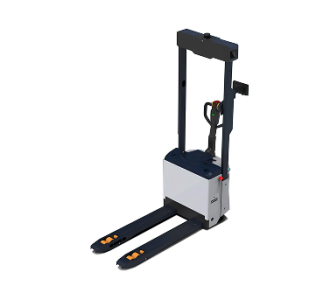
An electric pallet jack has no mast. Its forks rise only enough to clear the floor: 80 mm on Hangcha’s walkie model and 125 mm on its rider models. Safe Work Australia puts it plainly: apart from forklift trucks, no other industrial lift truck needs a high risk work licence to operate (Safe Work Australia, General guide for industrial lift trucks).
Walkie vs rider: does riding on it change the answer?
No. Riding on a low-lift pallet jack doesn’t turn it into a forklift.
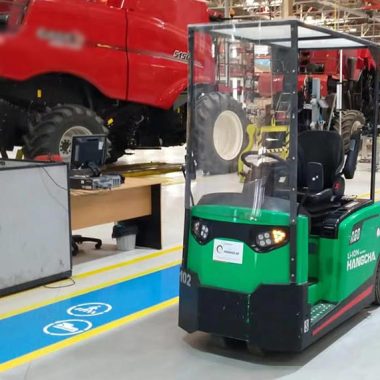
A walkie electric pallet jack is steered from a tiller while the operator walks alongside. It is excluded from the forklift definition twice over: it is pedestrian-operated, and it is a pallet truck.
A rider model lets the operator stand on a platform or sit, so it is no longer pedestrian-operated. It is still a pallet truck with no mast, though. Safe Work Australia’s guide lists rider-seated low-lift pallet trucks among the trucks that don’t need a licence. It lists rider-seated high-lift pallet trucks among those that do (Safe Work Australia, General guide for industrial lift trucks).
What riding does change is speed. A faster truck needs more training on cornering, braking and pedestrians, even with no licence involved.
| Hangcha model | Operator position | Capacity | Lift height | Travel speed (laden / unladen) | HRW licence |
|---|---|---|---|---|---|
| A-Series Mini Walkie | Walks behind | 1,500–2,000 kg | 80 mm | 4.5 / 4.8 km/h | Not required |
| A-Series Rider | Stands on platform | 2,000–3,000 kg | 125 mm | 6.5 / 7.0 km/h | Not required |
| A-Series Hi-Range | Stands on foldable platform | 2,000–3,000 kg | 125 mm | 9.0 / 9.5 km/h | Not required |
Specs from the Hangcha electric pallet jack range. Every model still needs trained, authorised operators.
When you do need a licence
You need a licence once the truck has a mast and can lift the load 900 mm or more, and the operator rides on it. This usually happens when a site moves from floor-level moves to stacking on racking.
| Equipment | HRW licence? | Why |
|---|---|---|
| Walkie electric pallet jack | No | Pedestrian-operated pallet truck, no mast |
| Rider (low-lift) electric pallet jack | No | Pallet truck, no mast, lifts well under 900 mm |
| Walkie (pedestrian) stacker | No | Pedestrian-operated lift truck, not a forklift |
| Ride-on stacker or rider high-lift pallet truck | Yes, LF | Mast and elevating carriage, lifts 900 mm or more |
| Counterbalance, reach or side-loading forklift | Yes, LF | Forklift truck |
| Order picker (stock picker) | Yes, LO | Operator’s controls rise with the load |
Sources: Safe Work Australia’s general guide for industrial lift trucks lists which truck types need a licence. WorkSafe Queensland describes order pickers and the LO class.
If you need to lift pallets onto racking, compare our pallet stackers. Check the licence requirement for each model before you buy, especially ride-on versions.
No licence doesn’t mean no training
The legal duty moves from the operator to the business. Under the model WHS laws, a business must give workers the information, training, instruction and supervision they need to stay safe (Safe Work Australia, PCBU duties).
For trucks that don’t need a licence, Safe Work Australia’s guide spells out what that means (general guide for industrial lift trucks):
- Train operators on the specific truck type and any attachments they use.
- Explain the hazards, risks and controls at your own site.
- Give operators easy access to the manufacturer’s instructions.
- Use a competent person to deliver the training.
- Supervise trainees until they are competent.
A forklift licence doesn’t replace this. An LF holder still needs training on your electric pallet jack before using it.
A common way to show competency is a verification of competency (VOC): a written and practical check, then written authorisation to operate. No licence or nationally recognised qualification is legally required to operate an electric pallet jack.
A good site program covers:
- Daily pre-start checks: brakes, horn, emergency stop, tiller, forks and wheels
- Controls and travel speed, including how the tiller brake works
- Rated capacity and load stability
- Ramps, dock plates and gradients
- Pedestrian zones and traffic management
- Battery charging, including lithium-ion opportunity charging
- Container, truck and tail-lift work, if you do it
- Records of training, VOC and refreshers
Hangcha Australia offers operator and maintenance training for the equipment we supply.
State and territory notes
The answer is the same in every state and territory. Victoria has its own OHS Regulations; everywhere else follows the model WHS laws. Victoria’s 2017 regulations removed the old requirement to hold a forklift licence to operate low-lift pallet trucks (OHS Reps @ Work).
| State / territory | Law | Regulator |
|---|---|---|
| Victoria | Occupational Health and Safety Regulations 2017, Part 3.6 | WorkSafe Victoria |
| New South Wales | Model WHS laws | SafeWork NSW |
| Queensland | Model WHS laws | WorkSafe Queensland |
| Western Australia | Work Health and Safety (General) Regulations 2022 | WorkSafe WA |
| South Australia | Model WHS laws | SafeWork SA |
| Tasmania | Model WHS laws | WorkSafe Tasmania |
| ACT | Work Health and Safety Regulation 2011 (ACT) | WorkSafe ACT |
| Northern Territory | Model WHS laws | NT WorkSafe |
If a machine doesn’t fit neatly into a category, ask your state regulator before you put it to work.
Choosing the right electric pallet jack for your site
Because no licence is needed, choose on the job, not on paperwork. Our electric pallet jack range covers walkie and rider models from 1,500 to 3,000 kg, all on lithium-ion power.
- Short runs, tight backrooms, containers: the A-Series Mini Walkie, with a 1,296 mm turning radius.
- General warehouse work, longer runs: the A-Series Rider, for 2,000–3,000 kg with less walking.
- Large sites and long travel distances: the A-Series Hi-Range, the fastest model in the range.
- Lifting onto racking: a pallet stacker instead.
Not sure your aisles are wide enough? Read our aisle width and turning radius guide.
Talk to our team on 1300 399 687 or get a quote. We support customers from Dandenong South (VIC), Meadowbrook (QLD) and Smeaton Grange (NSW).
Electric pallet jack licence FAQ
Do you need a licence to operate an electric pallet jack in Australia?
No. Electric pallet jacks are pallet trucks with no mast, so they fall outside the forklift definition and no high risk work licence is required. The business must still train, authorise and supervise every operator.
Do you need a licence for a rider or ride-on electric pallet jack?
Not for a low-lift rider model that only lifts the pallet off the floor. A ride-on truck with a mast that lifts 900 mm or more is a forklift and needs an LF licence.
Is there an electric pallet jack ticket?
No government licence or ticket exists for electric pallet jacks. Certificates from training providers and a VOC are evidence that an operator is competent. They are not a licence.
Can I use an electric pallet jack if I have a forklift licence?
Yes, but the licence doesn’t cover it. You still need training on that specific truck and your site’s hazards before you operate it.
Do you need a licence for a walkie stacker?
No, if it is pedestrian-operated. Ride-on stackers with a mast that lifts 900 mm or more need an LF licence.
What training should an electric pallet jack operator have?
Training on the specific model, the site’s traffic rules and hazards, pre-start checks, load limits, ramps and battery charging. Finish with a practical assessment and written authorisation.
Disclaimer
This article is general information, not legal advice. Laws change, so check with your state or territory WHS regulator for your situation.
Sources
- Safe Work Australia: High risk work licence classes
- Safe Work Australia: General guide for industrial lift trucks (July 2014)
- Safe Work Australia: Duties of a PCBU
- WorkSafe Queensland: Forklift truck licences
- WorkSafe Victoria: Introduction to forklift health and safety
- OHS Reps @ Work: 3.6 High Risk Work